


Maintain references
Existing gene master data creates a common basis for recurring information.
Gene master data and animal-related genotype information support uniform documentation. This means that technical terms, master references and individual information remain distinguishable.
A common reference standardizes recurring information.
Function example with synthetic data
Existing gene master data creates a common basis for recurring information.
Individual genotype information and associated entries remain with the animal.
Strain description, expected characteristics and actually documented findings are kept apart from a technical point of view.
Gene master data and individual genotype information are kept separate.
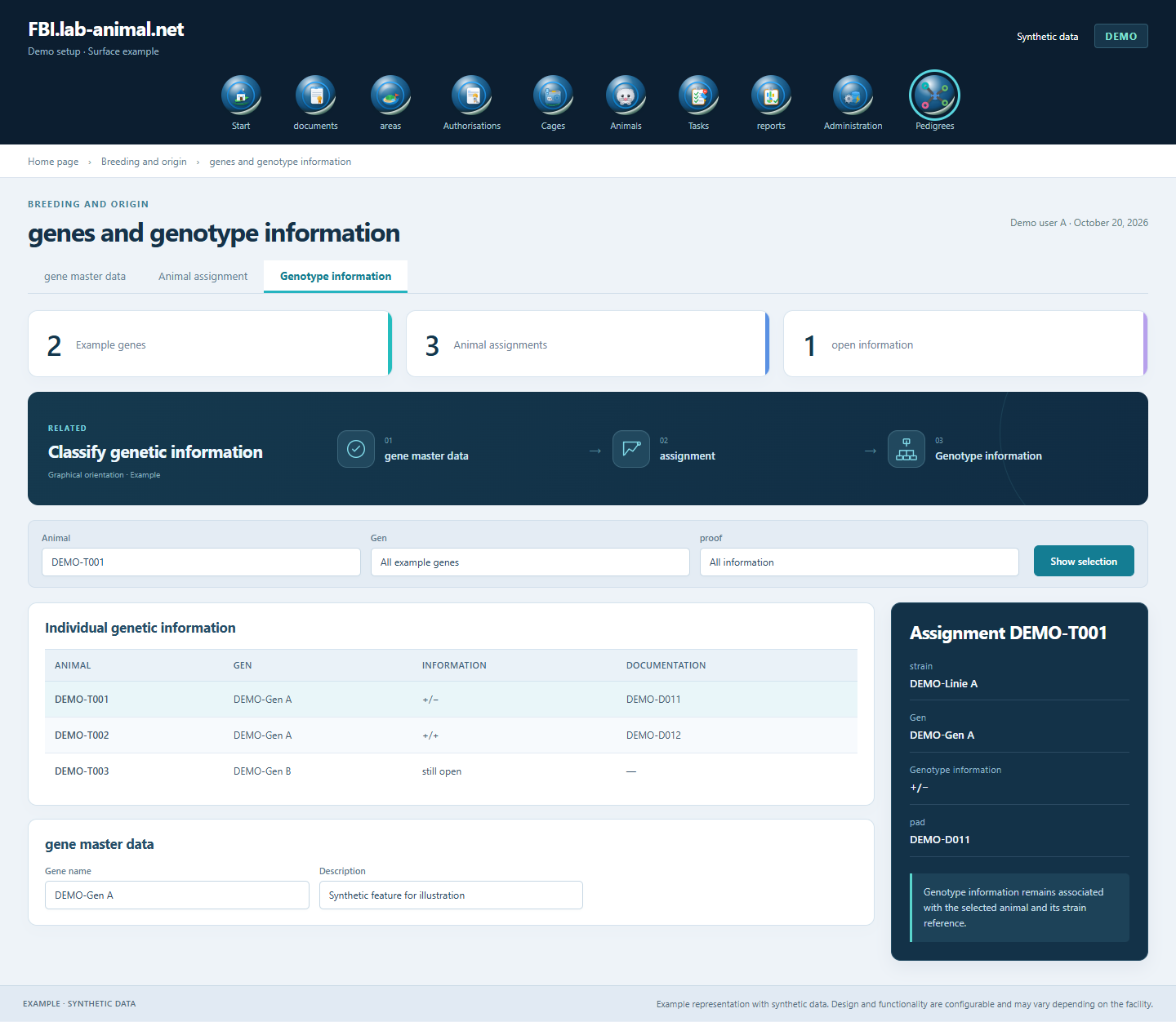
Structured references standardize documentation. Individual genotype information remains discoverable and technically classified in the animal context.
Check the appropriate existing gene or strain reference.
Differentiate between expectation and actual information.
Capture the individual information in the associated animal context.
Use saved information for search and further documentation.
Gene master data and individual genotype information create structured documentation. Your team connects stored findings with the appropriate animal and strain reference.
Gene master data serves as a uniform reference for recurring information. This makes documentation and later retrieval easier.
Genotype information and associated entries are documented on the animal. This means that the general strain description and the individual findings remain assigned.
Example representation with synthetic data. Design and functionality are configurable and may vary depending on the facility.
Together we will clarify what scope suits your facility and what the introduction can look like.
Let’s talk