


Connect parents
Matings receive a comprehensible reference to the selected breeding animals.
Breeding animals, matings, litters and weanlings remain connected. In this way, the path from the parent animal to the assigned young animal can be traced.
The parents remain connected to the associated breeding process.
Function example with synthetic data
Matings receive a comprehensible reference to the selected breeding animals.
Litter date and recorded offspring numbers remain in the breeding context.
Young animals are created via the associated weaning process and assigned to their target cages.
pairing, litter and assignment with weaning form a comprehensible process.
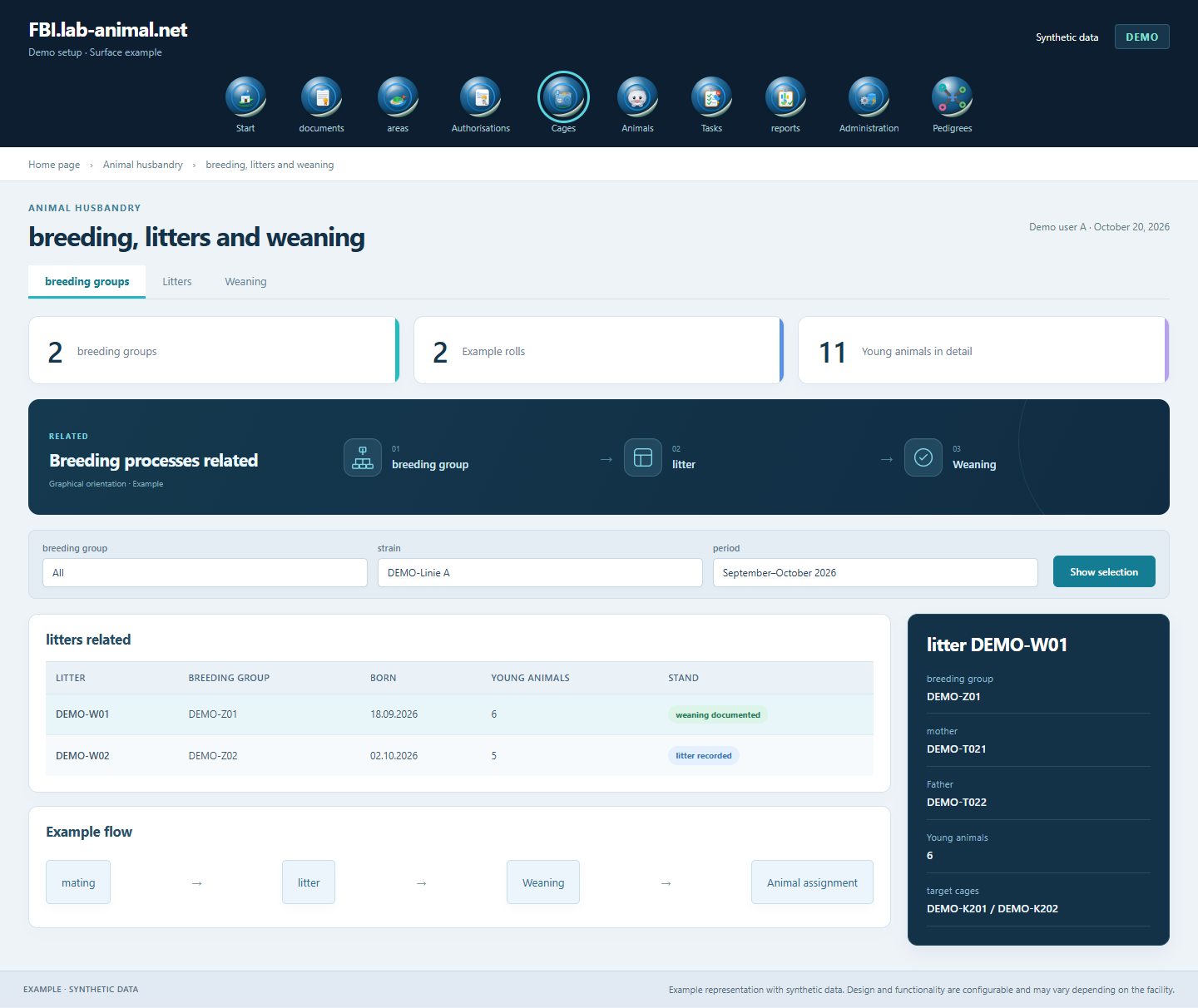
Weaning combines litter information with further animal management. A careful check of the quantities and target assignments is part of the process.
Assign breeding animals and the associated context.
Document the date and actual information available.
Check young animal information, gender and target cages.
Cross-check animals produced and their relationship to the litter.
pairing, litter and weaning form a connected sequence. The origin of the young animals and their assignment to target cages remain traceable.
Matings link the selected breeding animals. Litter information and weaning continue this relationship to the young animals created.
Young animal information, gender and target cages are brought together during the weaning process. Classic and direct operating variants support different working methods.
Example representation with synthetic data. Design and functionality are configurable and may vary depending on the facility.
Together we will clarify what scope suits your facility and what the introduction can look like.
Let’s talk