


Uniquely identify
Animal identification, name and, if applicable, transponder data support the assignment.
Identity, origin, husbandry and subject classification come together in the animal data set. Diary, lineage and other events are linked to this.
The unique assignment occurs before every processing.
Function example with synthetic data
Animal identification, name and, if applicable, transponder data support the assignment.
Birth, parents, strain, line, cage and approval remain in the technical context.
Arrival, status and whereabouts complete the current view of the animal.
Animal identification leads to husbandry, origin, approval and documentation.
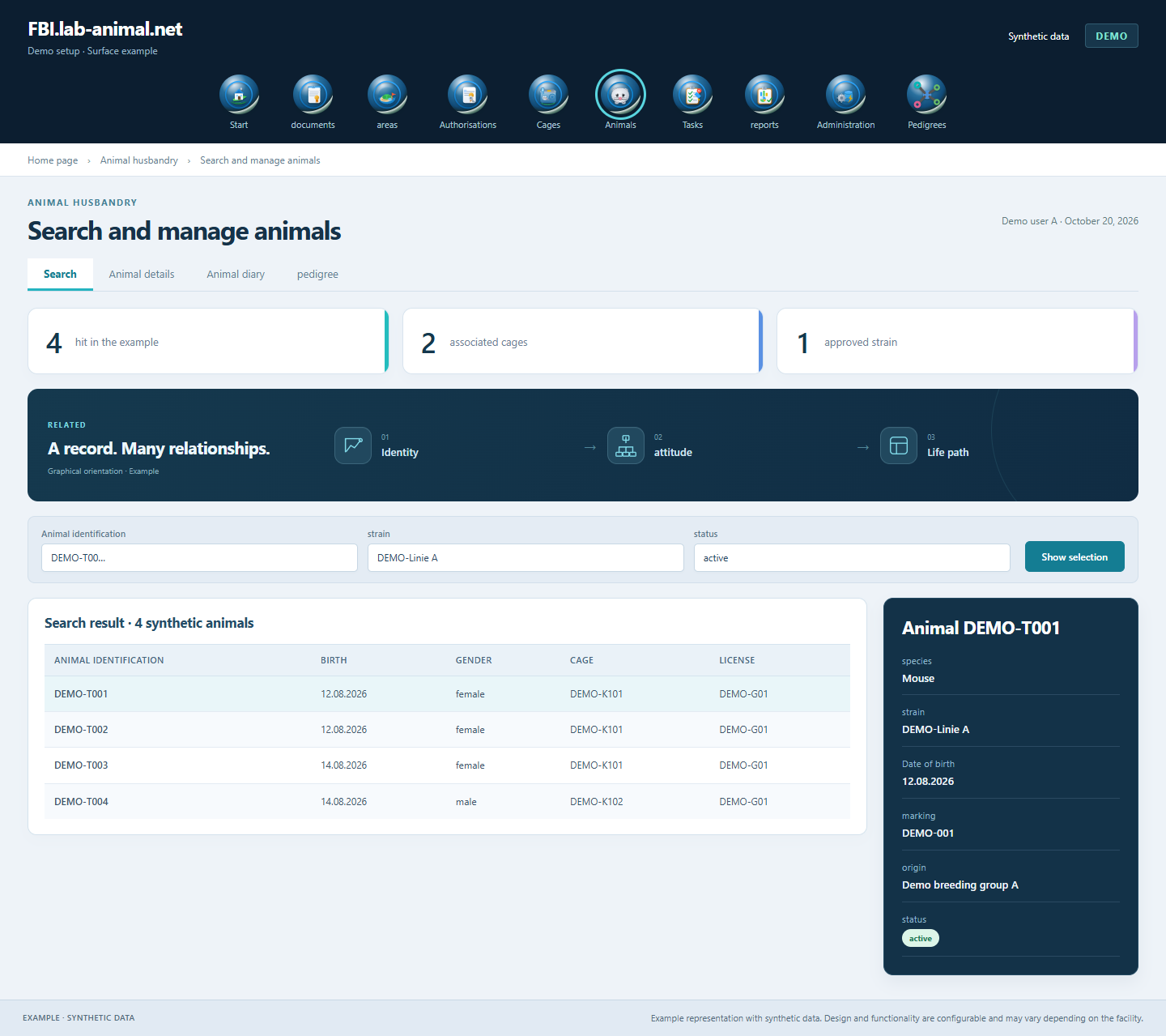
Animal management is the entry point for many daily tasks. A clear identity reduces the risk of processing information on the wrong animal.
Search for existing entries before creating or editing.
Classify identifier, species, gender and dates.
Connect cage, lineage and technical project context.
Continue documentation and associated specialist procedures on the animal.
A central animal data set connects identity, origin, husbandry, approval and life path. From here you can access the associated documentation.
Animal identification, name and, if necessary, transponder data help to clearly find the appropriate data record. The labeling used depends on the animal species and facility.
Birth, parents, strain, line, cage, approval and status are in the common animal context. Diary and ancestry view open up further connections.
Example representation with synthetic data. Design and functionality are configurable and may vary depending on the facility.
Together we will clarify what scope suits your facility and what the introduction can look like.
Let’s talk